
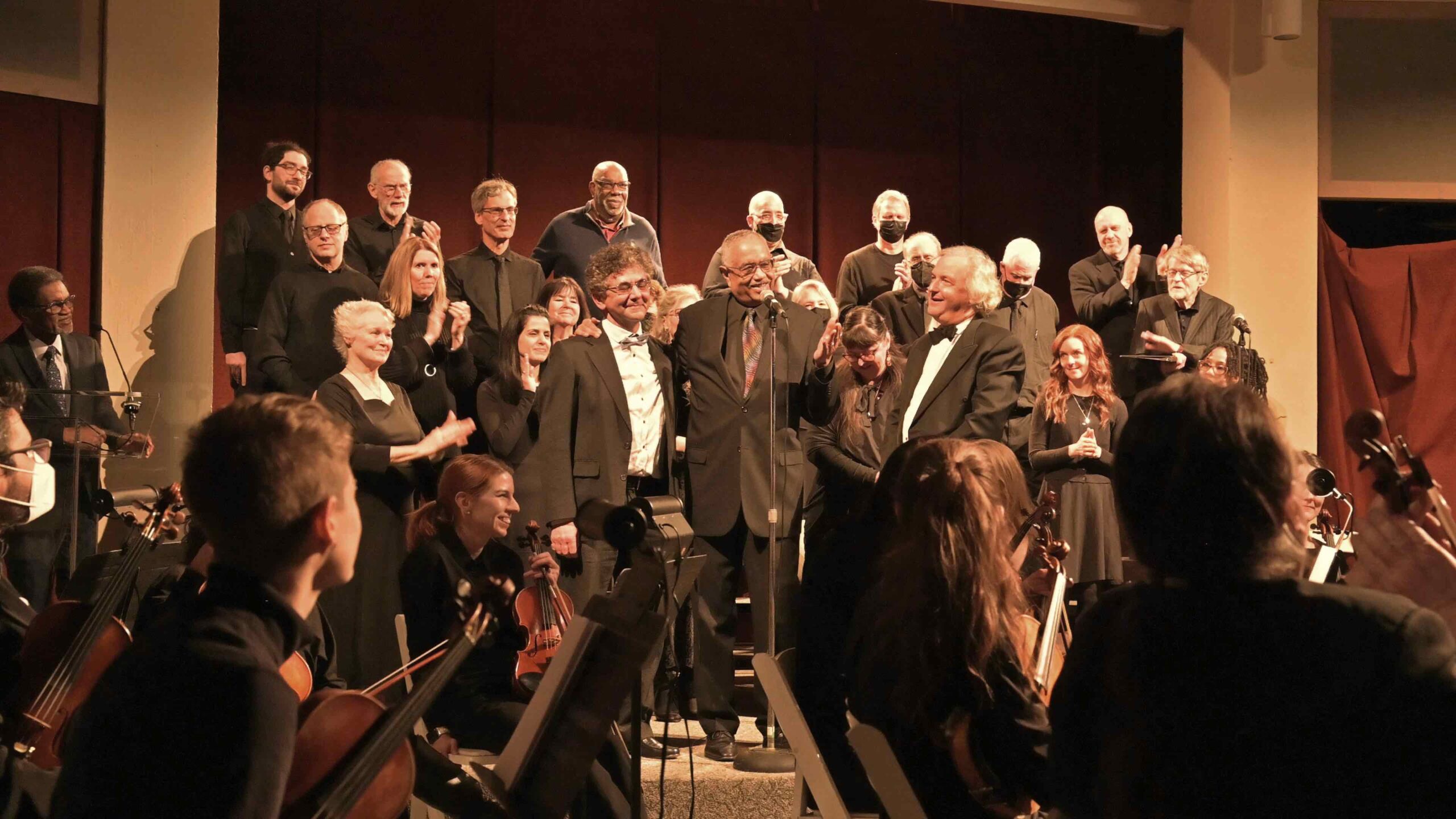
Two Bahá’í Temple events explore unity during Black History Month
March 20, 2026
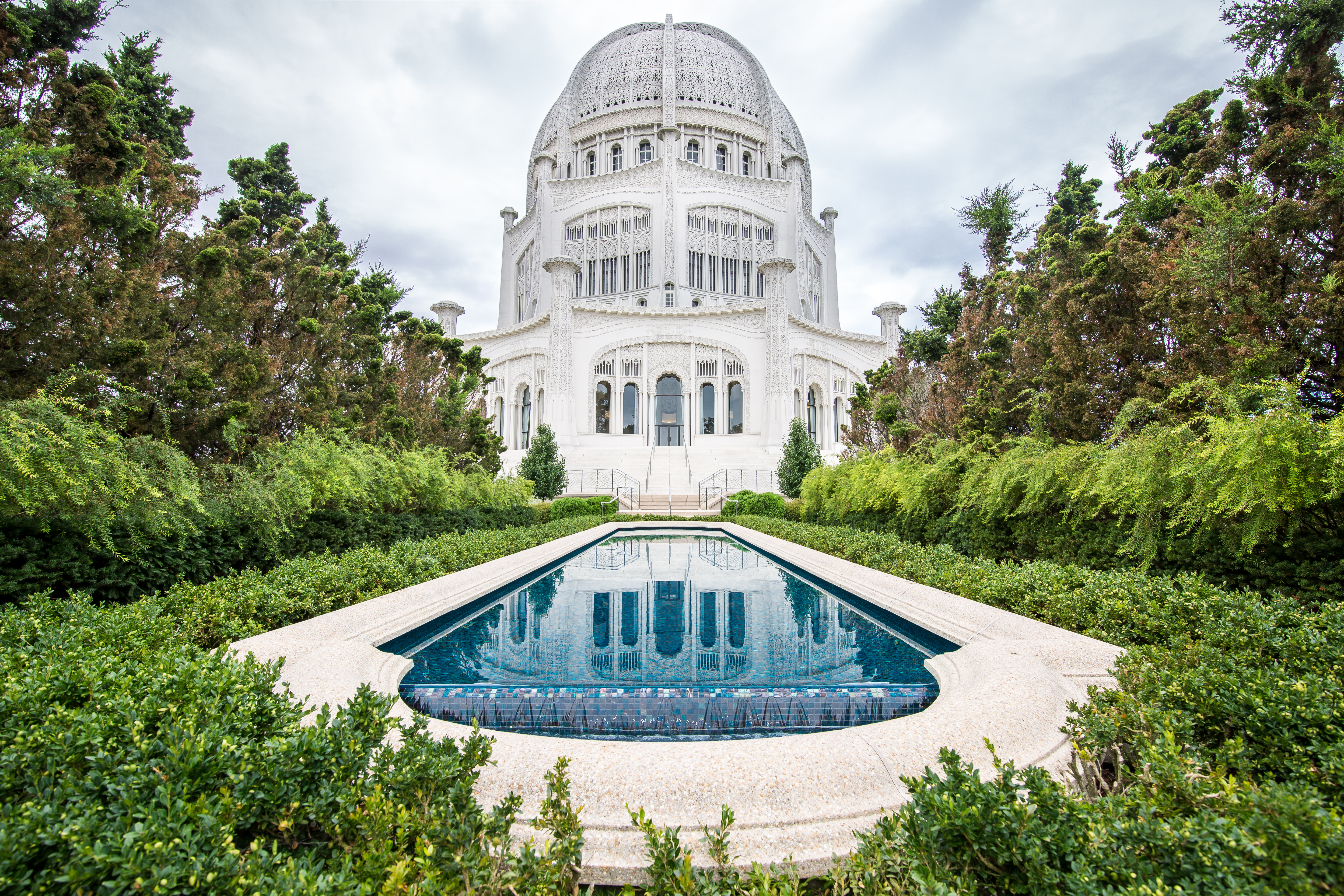
Black History Month events at the Wilmette Bahá’í House of Worship
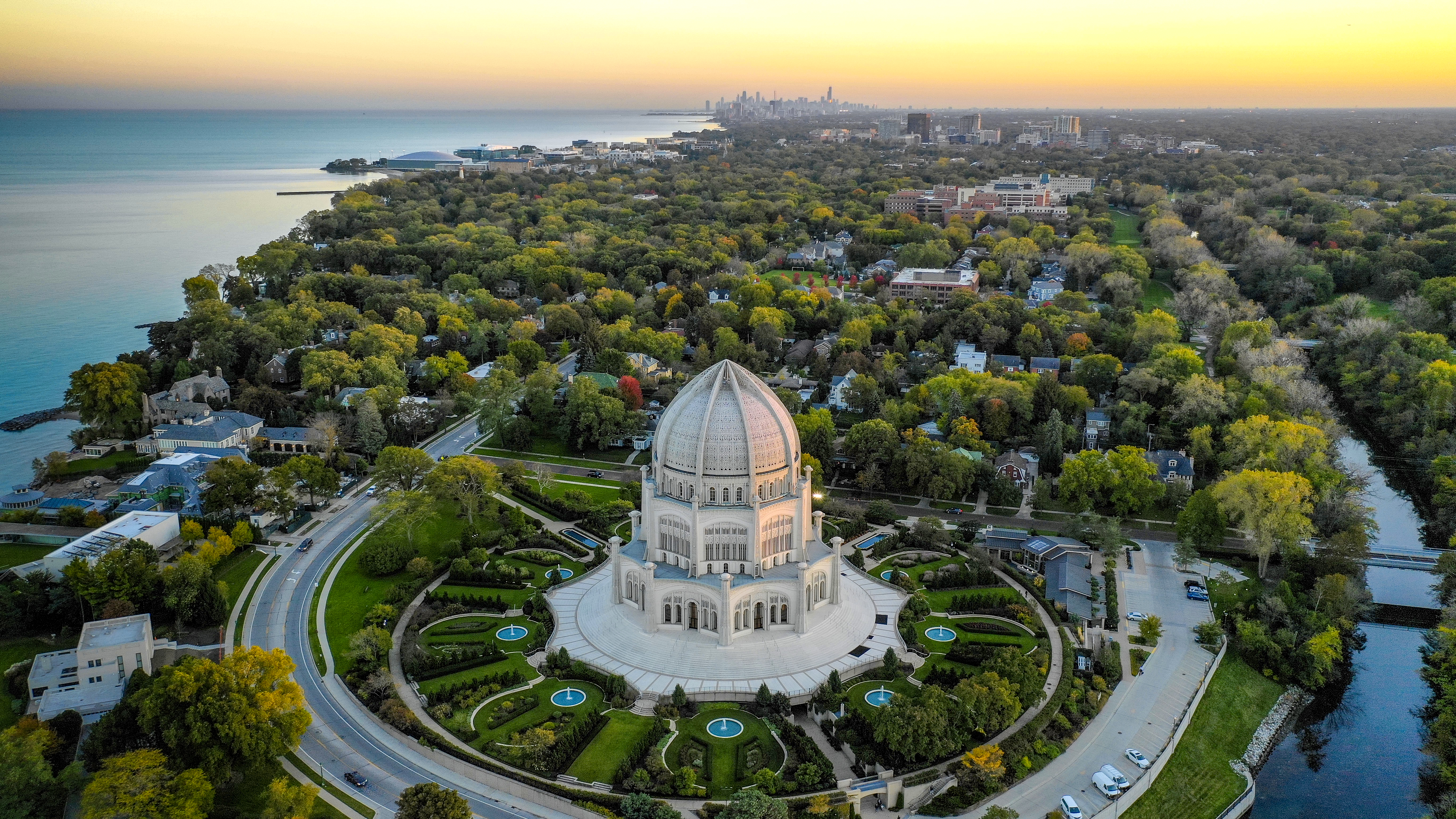
WILMETTE, ILLINOIS —In communities across the United States, people are searching for ways to move beyond conversations about race toward relationships that can genuinely transform society. Two recent gatherings at the Bahá’í House of Worship in Wilmette, just north of Chicago, offered a glimpse of what that can look like in practice.
Held during Black History Month—now marking a century since its earliest national observances—these events brought together artists, local leaders, and neighbors to reflect on racial harmony, shared identity, and what it means to build communities where everyone belongs.
At the heart of both gatherings was a simple but powerful idea: that the bonds of genuine friendship, formed not in spite of differences but through them, may be among the strongest forces for healing the wounds of prejudice.
Fostering Harmony Across Humanity
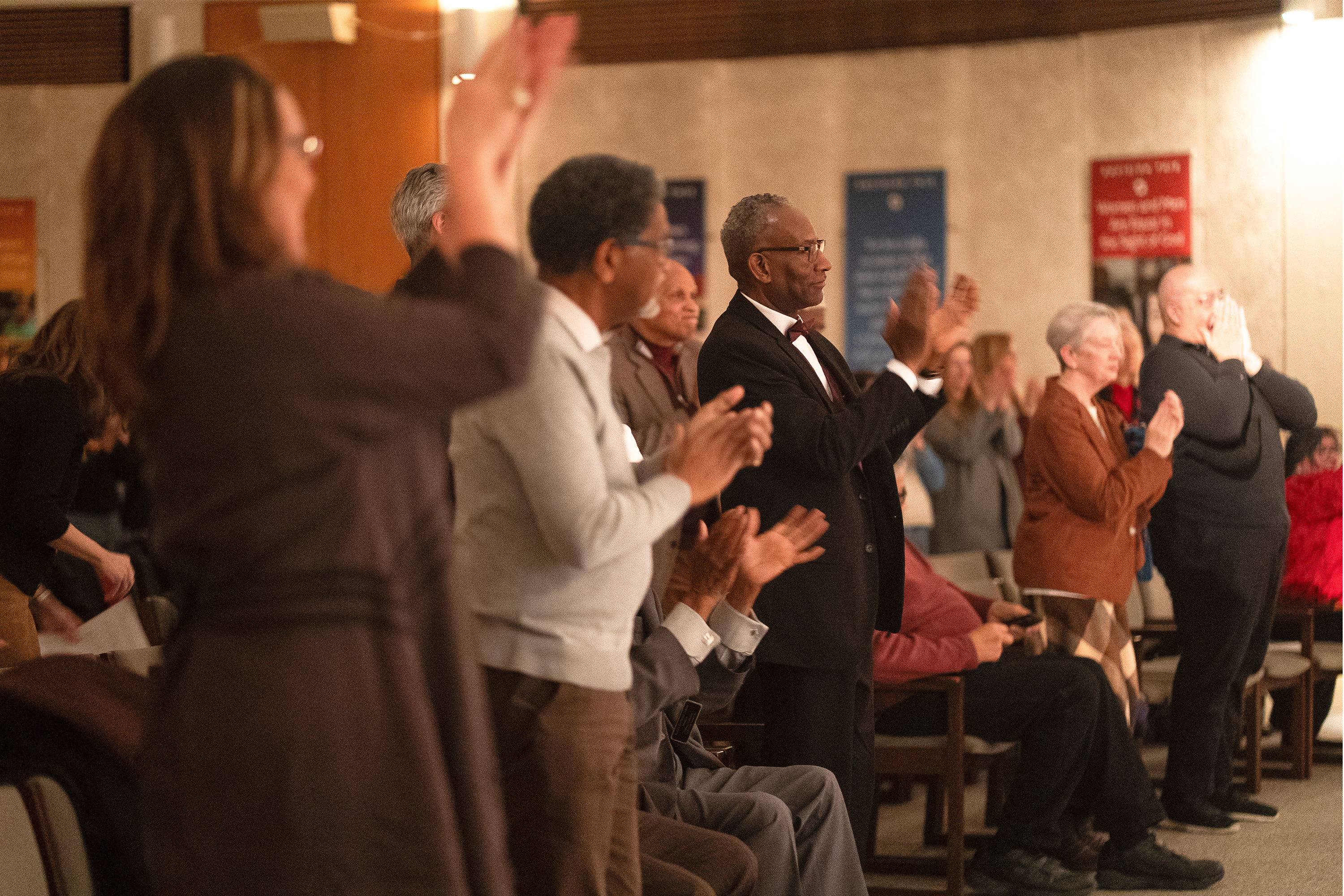
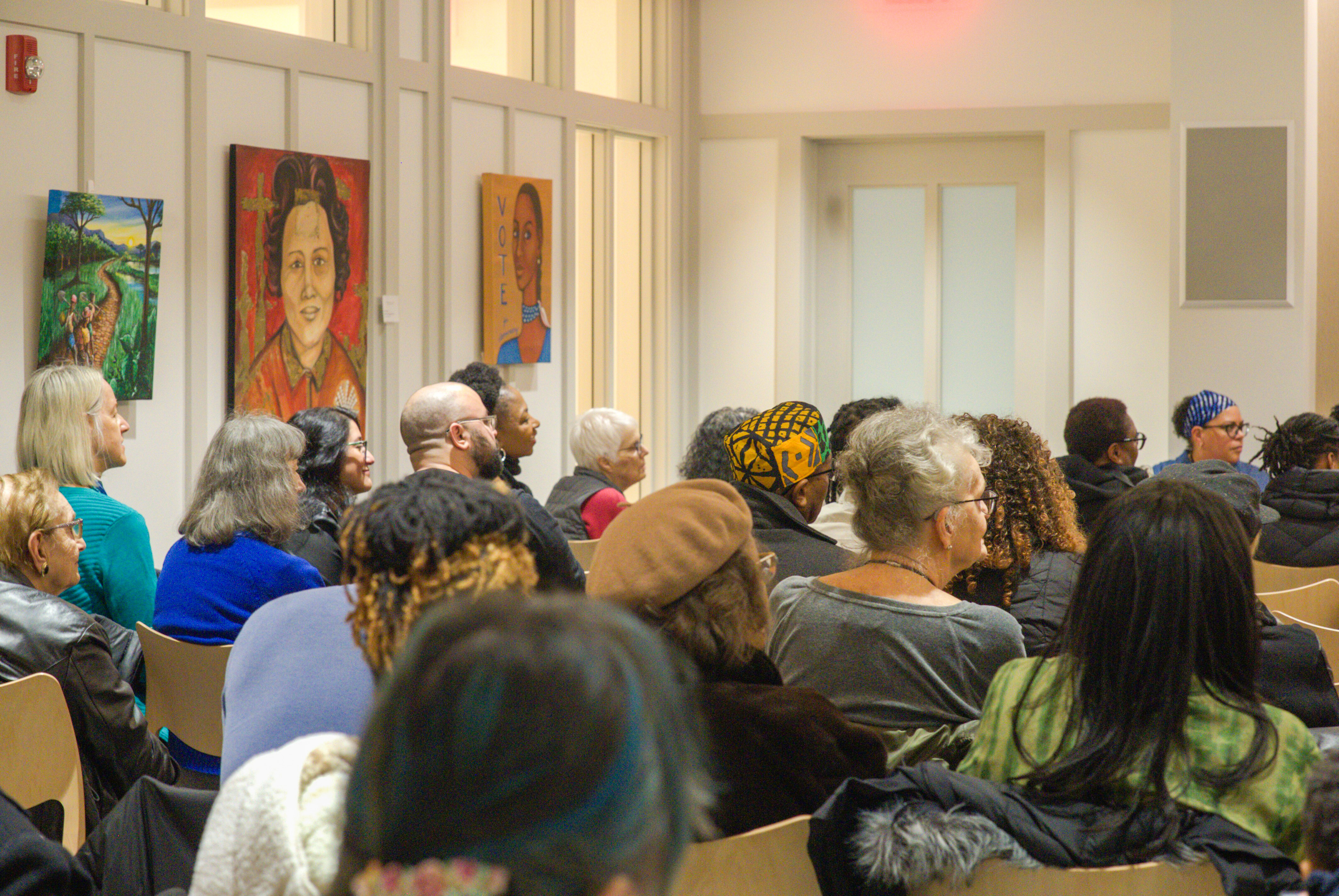
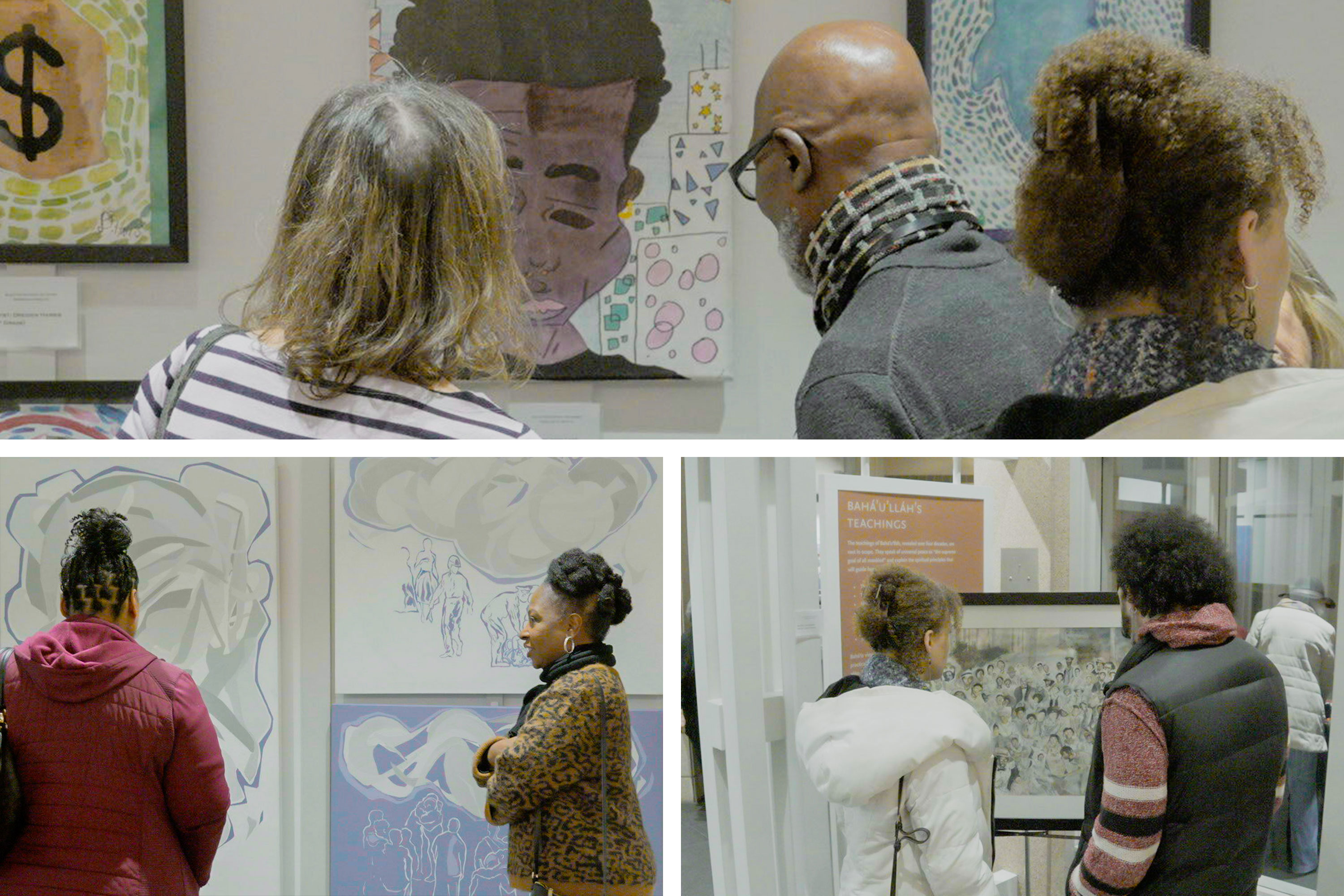
This year’s program included an exhibit, “The Legacy Continues,” featuring work by local Black artists. Around 100 people attended a panel discussion exploring the themes behind the artwork, while an interactive installation, “Better Together,” invited participants to imagine the kind of world they hope to see 100 years from now.
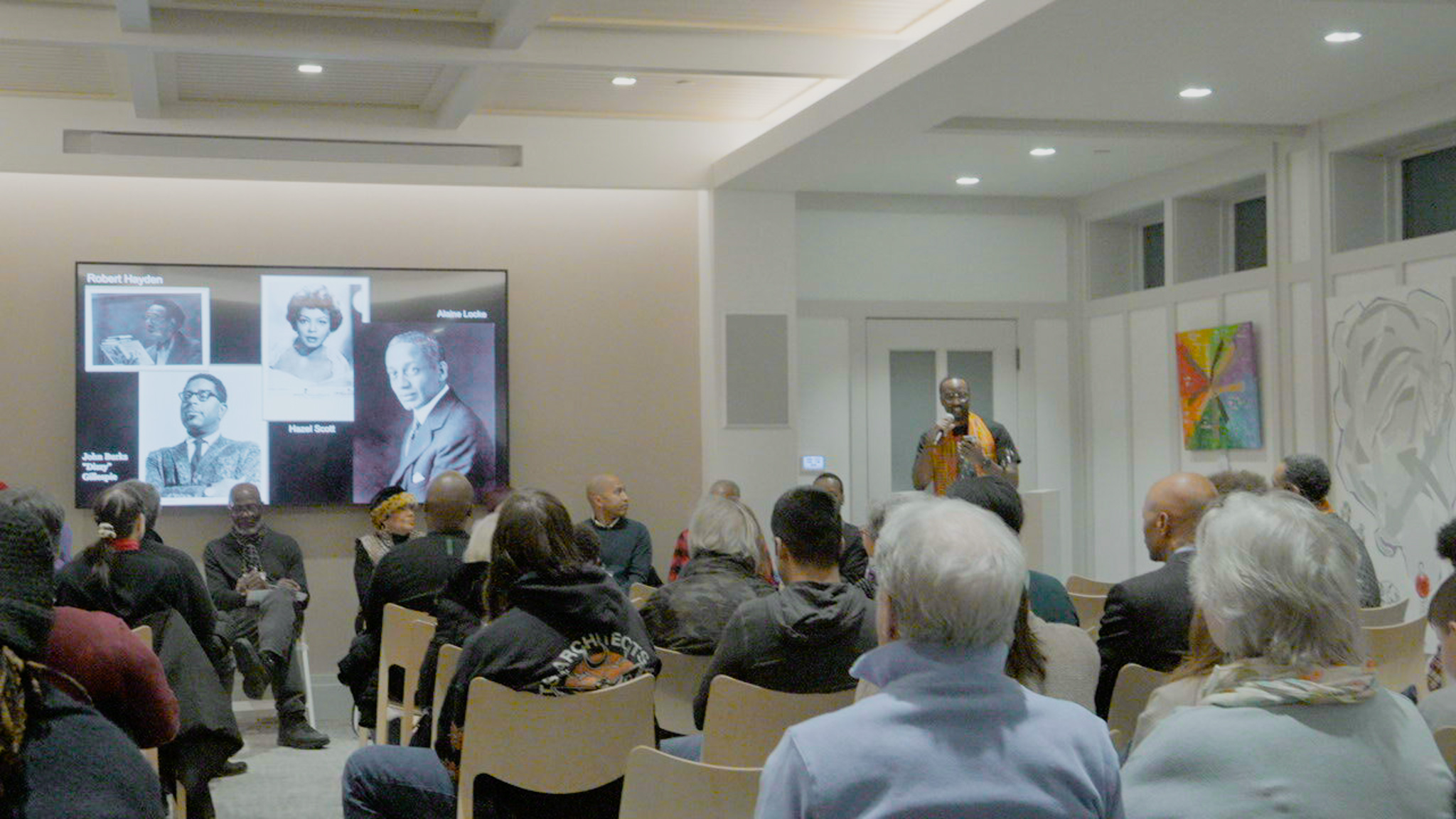
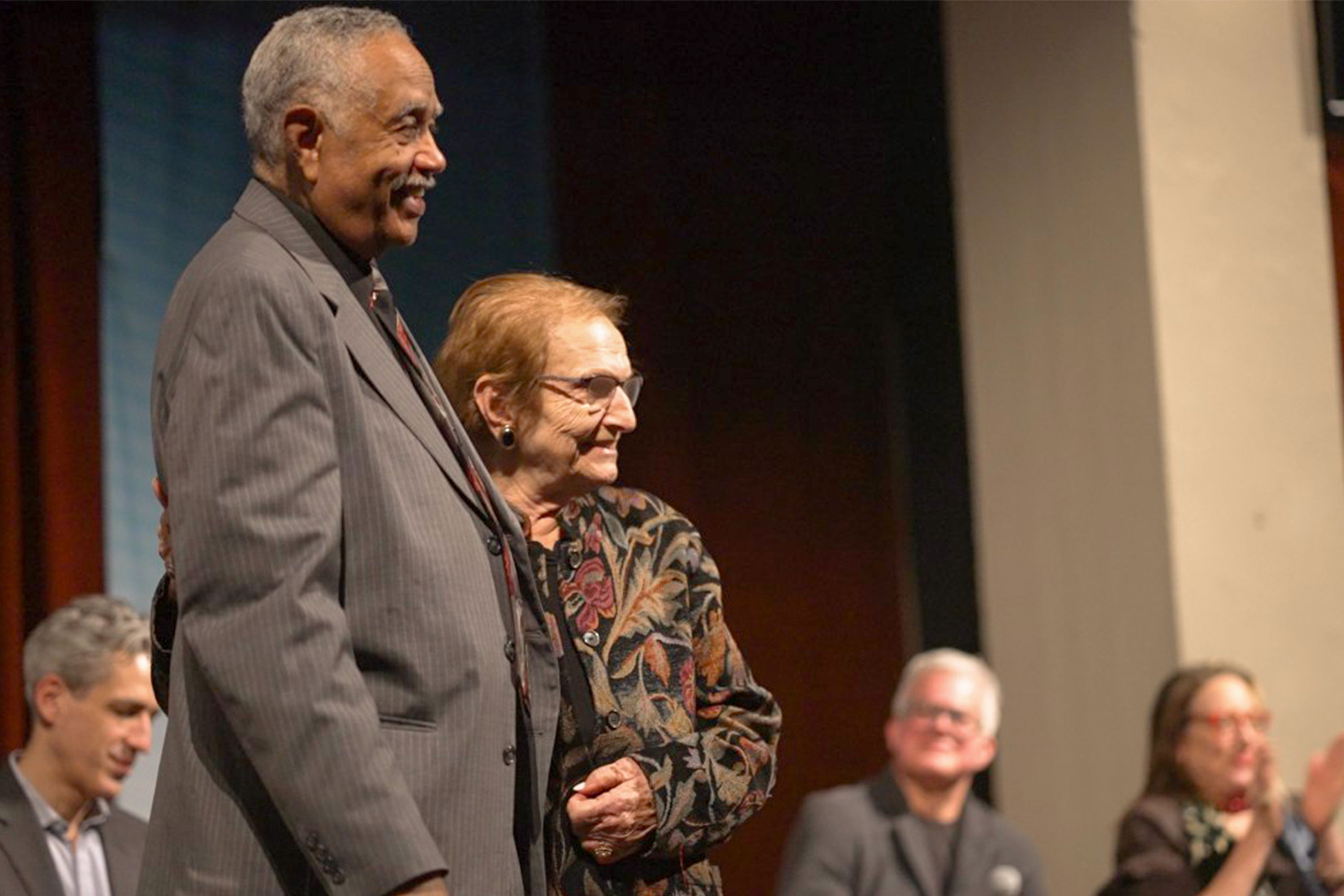
A second event, organized by the House of Worship’s Director of Music, Van Gilmer, gathered over 50 people for a community conversation titled “Blessed is the Spot.” The discussion brought together a diverse panel, including local mayors, an educator, a hospital chaplain from Chicago’s South Side, and others engaged in advancing equity and inclusion.
“[We have] some of our friends here in the North Shore who have been doing significant work in the area of equity, inclusion, diversity, and becoming one human family,” Mr. Gilmer said at the gathering. “All that is hard. The words are easy to say, but it’s all very hard.”
George Davis, director of the House of Worship, placed the evening in the broader context of the Bahá’í community’s long-standing focus on racial unity—described in the Bahá’í writings as “the most vital and challenging issue” facing American society.
Friendship Needed to Overcome Barriers
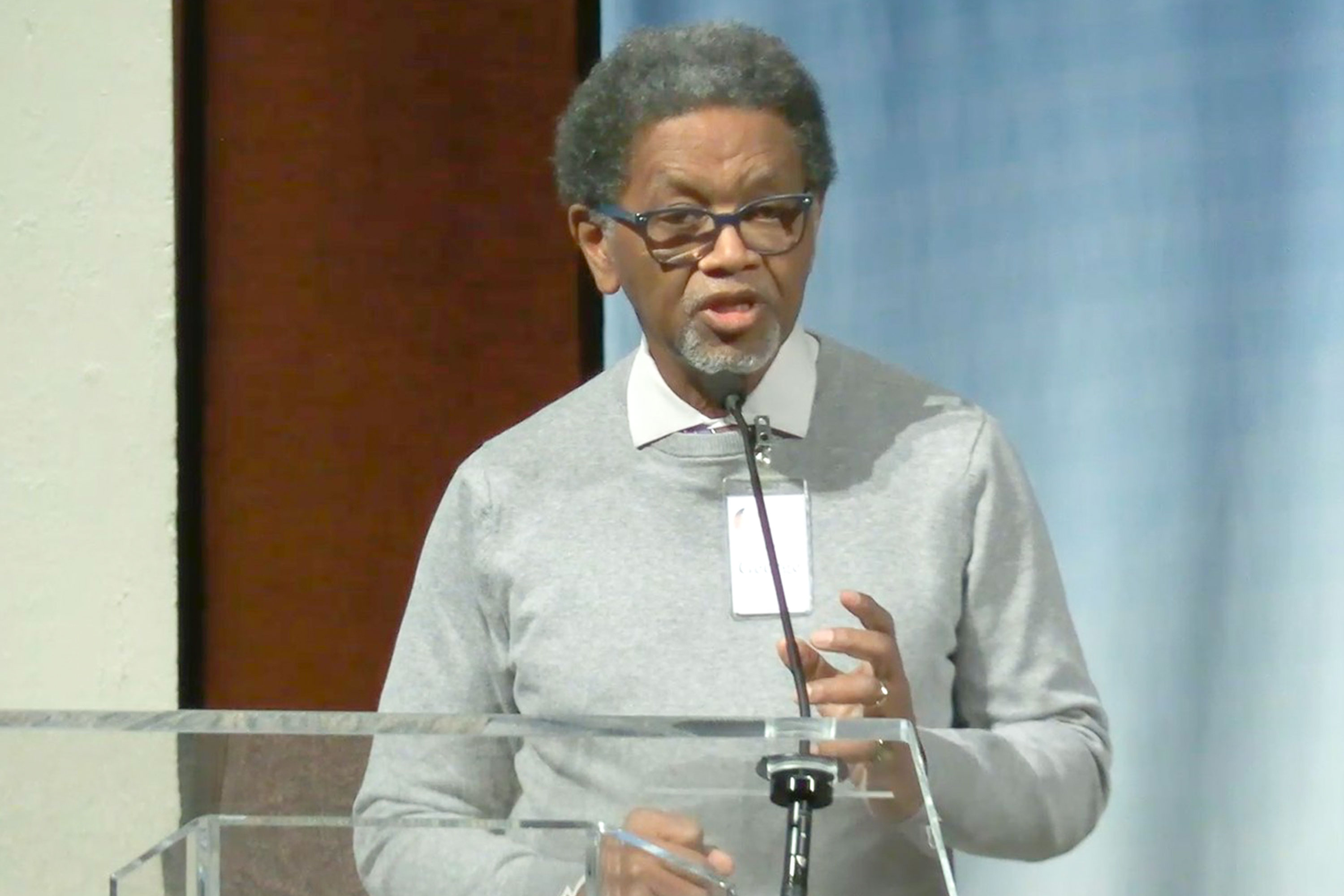
“There are so many like-minded people who increasingly recognize that this issue [racialized disunity] is one we have to tackle as a country,” Mr. Davis said, “but it can only be done effectively at the level of community and friendship and connection.”
Public policy and legislation remain important, he emphasized. To that, we must add a lasting change, that requires something deeper: a recognition of shared humanity and the strength that comes from diversity. The issue of overcoming racial prejudice, he added, “is not one that can be addressed or solved through policies or passing laws alone, as important as they may be.”
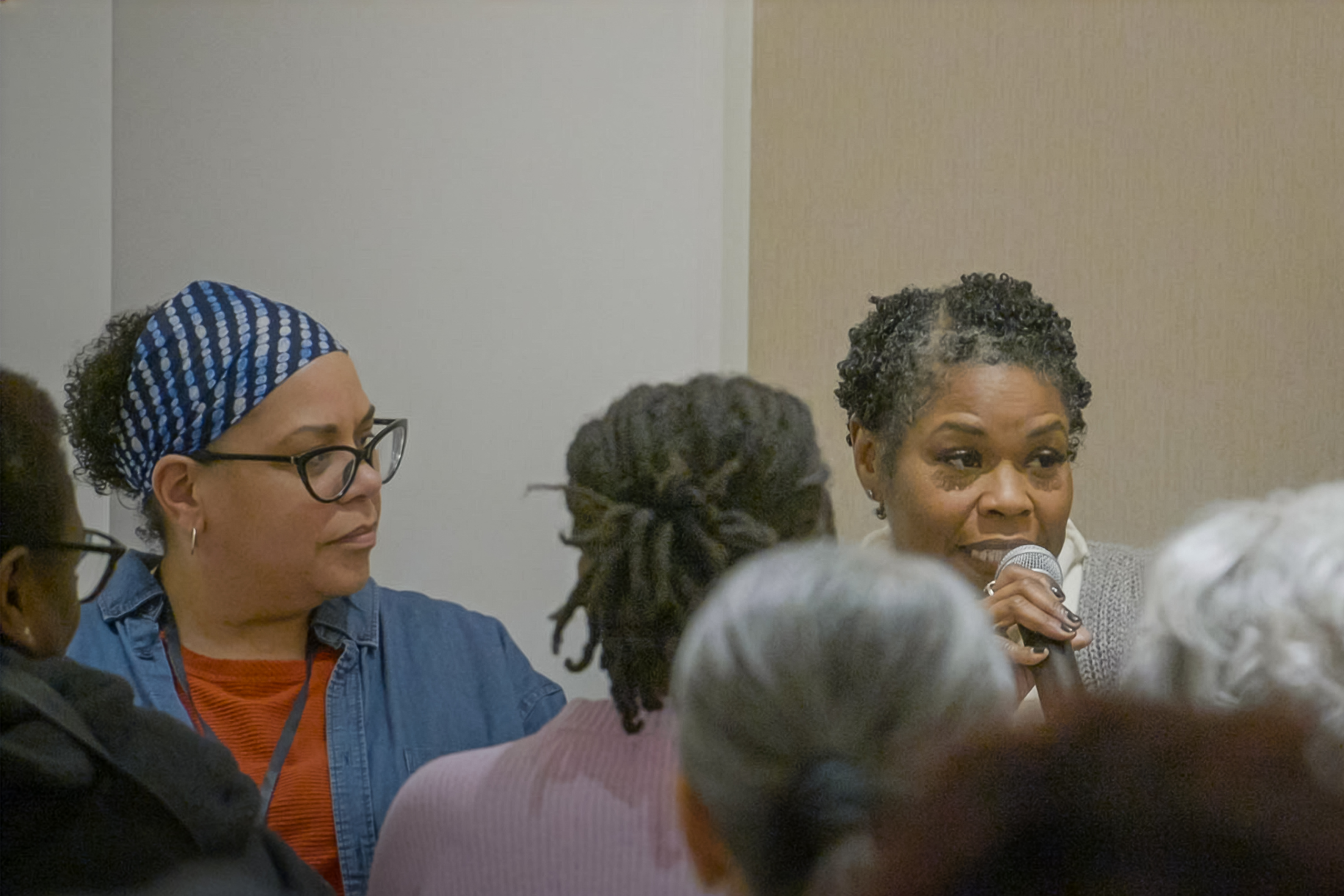
It requires something deeper, continued Mr. Davis, the recognition “not only of our common humanity, but of the strength that comes from unity in diversity, and the notion that everyone, regardless of, and maybe even because of, their background, has a part to play and a contribution to make to peace in society and to the betterment of the world.”
“These are the values that the Bahá’í Faith is dedicated to,” Mr. Davis said. “And the purpose of this House of Worship is really, ultimately, to bring together those who are striving to create a better world for all.”
The evening opened with spoken word poetry from a young Chicago artist, whose piece, “Matumaini na Amani” (“Hope and Peace” in Swahili), encouraged listeners to see hope as something already within reach:
“The closest steps to hope are the ones you are taking.
All the strongest efforts for peace are the ones you are making.”
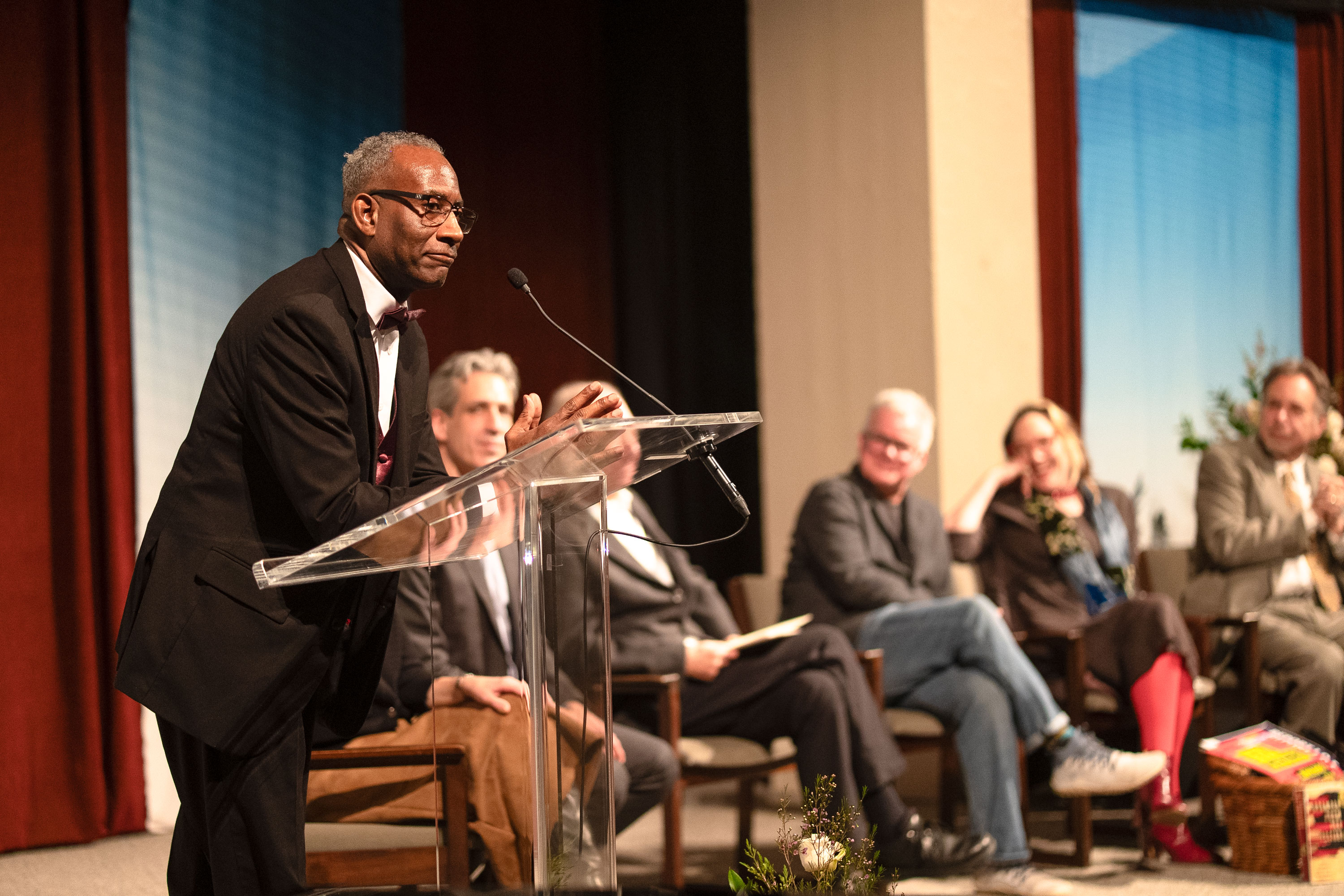
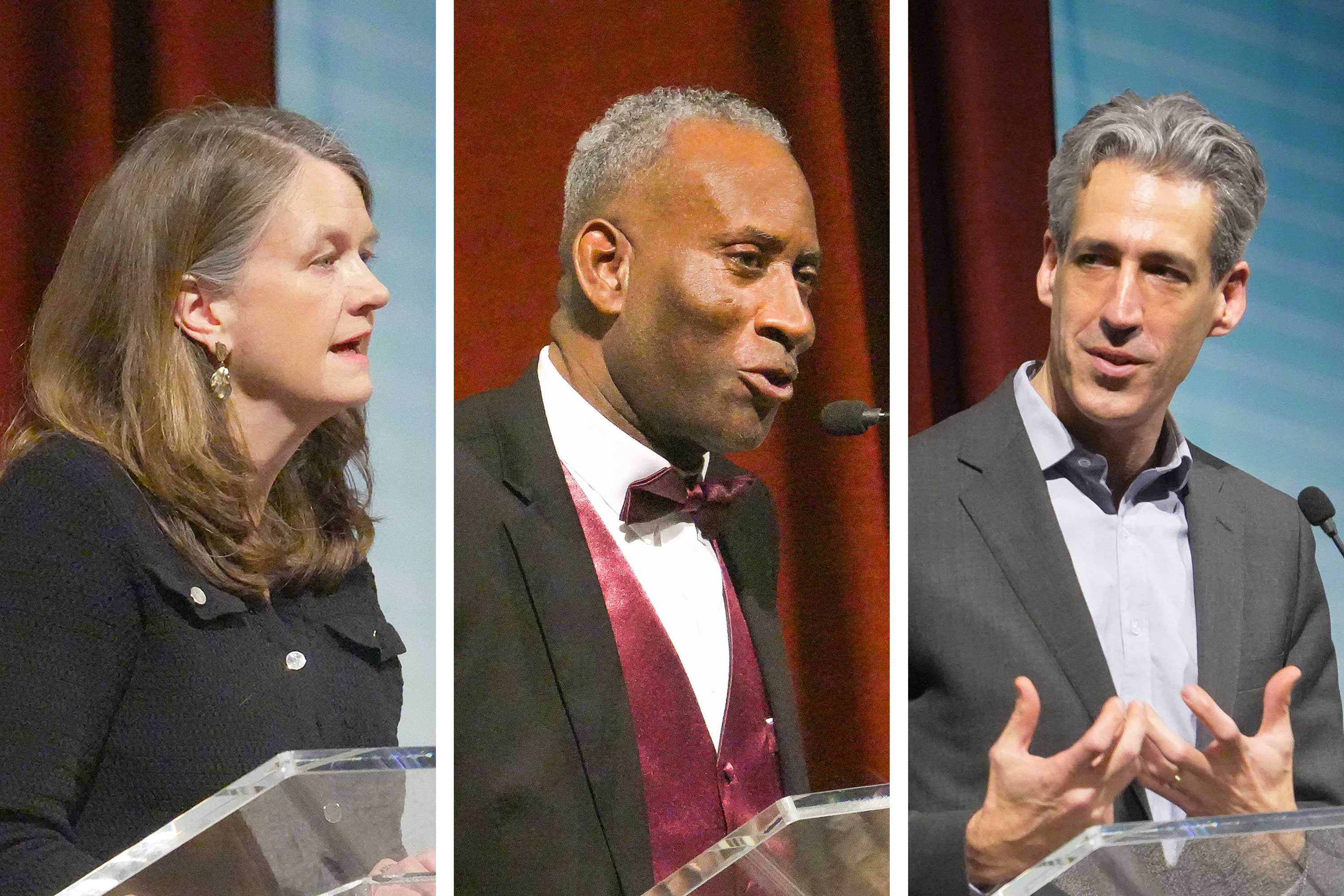
Panelists shared personal reflections on their work and experiences. Senta Plunkett, president of the Wilmette Village Board, spoke about local efforts to foster inclusion, while Daniel Biss, mayor of neighboring Evanston, described his city’s initiatives to address longstanding racial inequities.
“It is that fundamental, deep abiding faith that all people are of equal sacred value,” Mr. Biss said, “and that all of us are stronger and happier and wiser and safer when we live amongst each other in solidarity.”
One of the evening’s most memorable moments came from local resident Bruce Bondy, who reflected on a friendship he formed with Mr. Gilmer during a 2019 visit to civil rights sites in the American South, a trip for which the planning began at the House of Worship itself.
“I believe that there is nothing more powerful, and there is nothing that will help us overcome racism than true friendship between people of different races,” Mr. Bondy said.
“It’s not the same as having an acquaintance. It’s not the same as just going to lunch with somebody that you work with every once in a while.” Having a real friendship, one where both people feel safe enough to speak openly, “is what makes the difference.”
A Place with Deep Roots
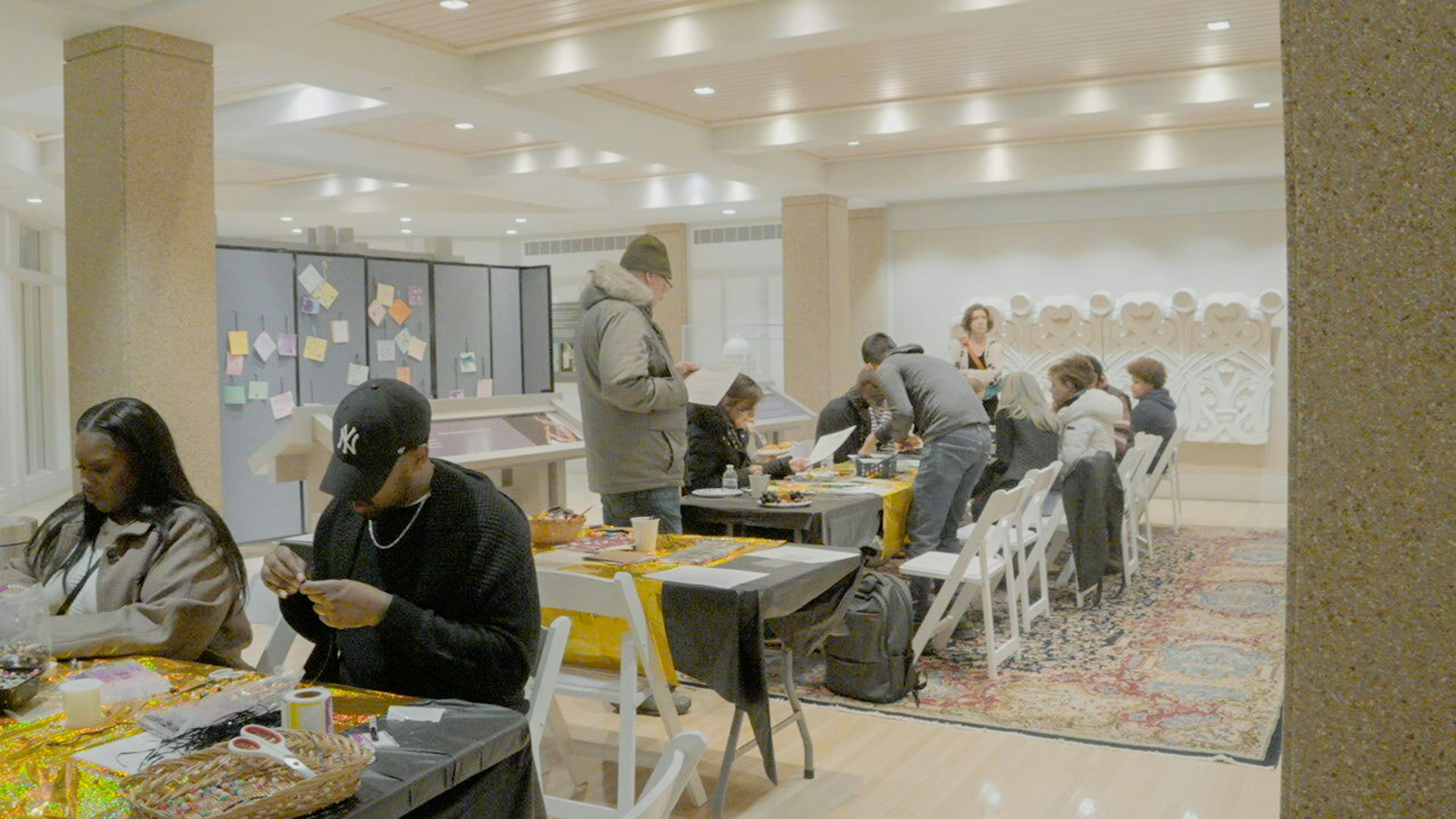
The gathering drew participants from a wide range of backgrounds—Bahá’í, Christian, Jewish, Muslim, and those with no religious affiliation—reflecting the inclusive spirit that has characterized the House of Worship since its founding.
That spirit carries deep historical roots. In 1912, ‘Abdu’l-Bahá, son of the founder of the Bahá’í Faith, laid the cornerstone of the temple and called for the elimination of all forms of prejudice and the recognition of humanity’s oneness.
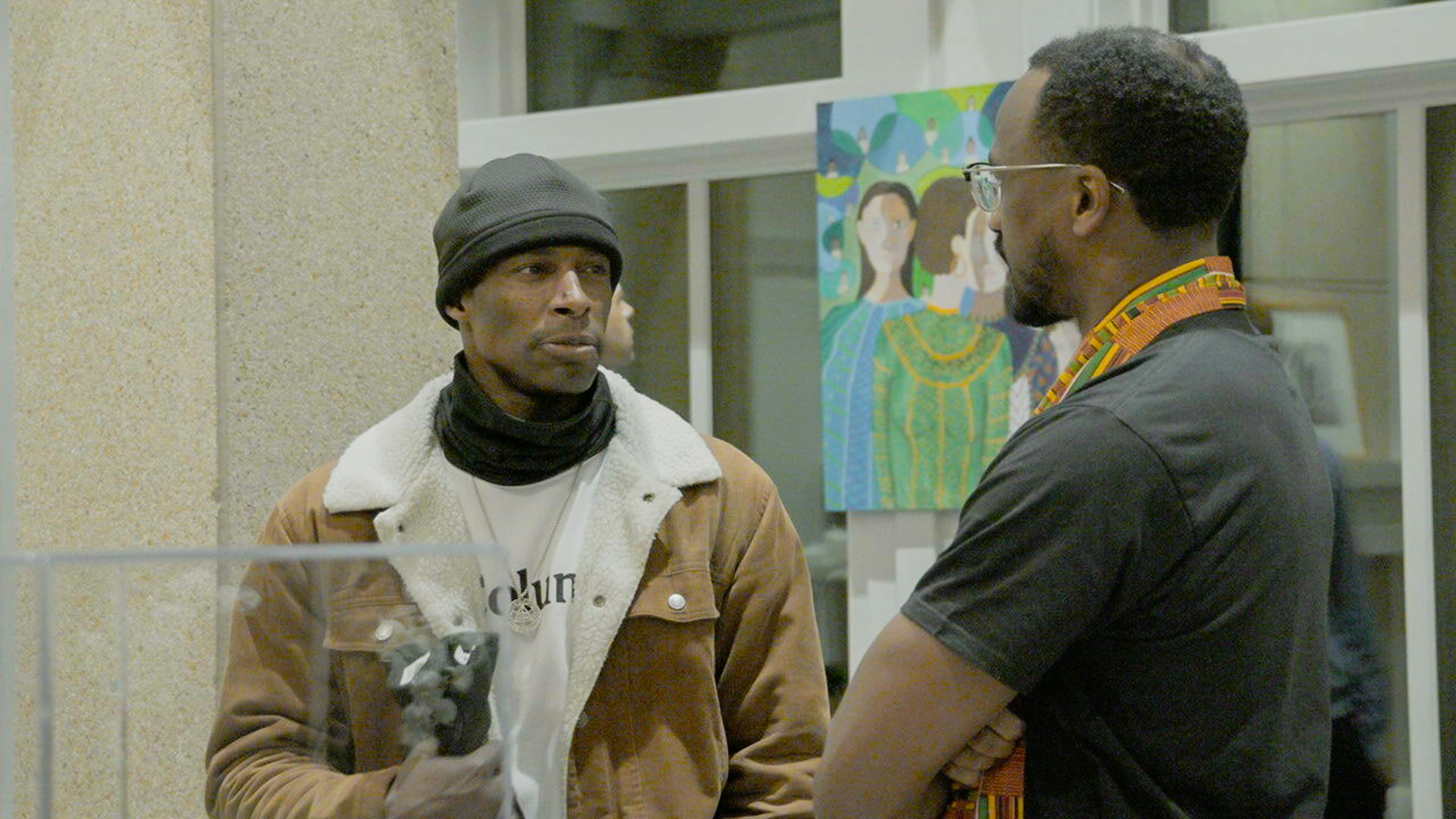
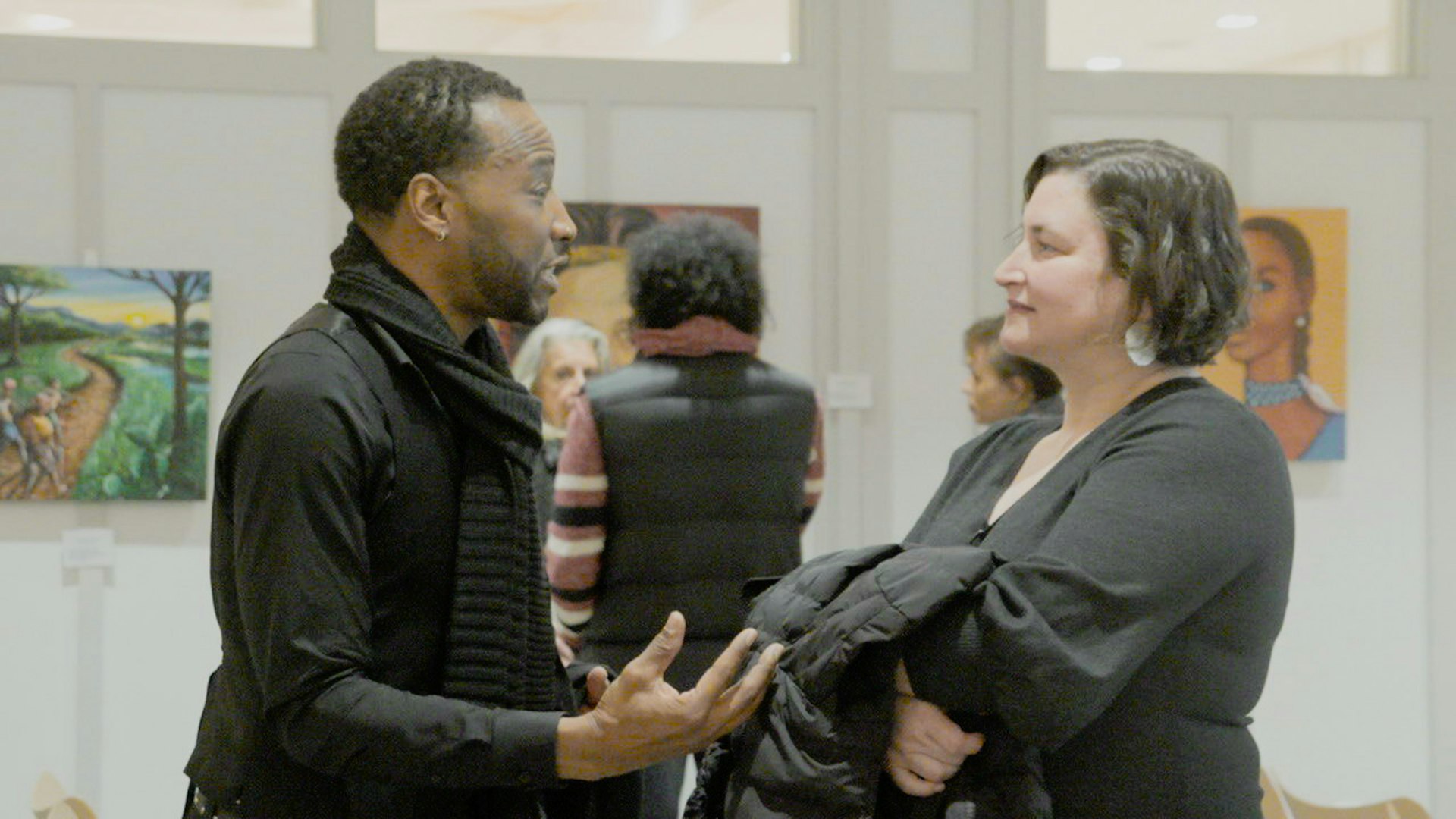
More than a century later, the House of Worship continues to serve as a space for both prayer and community-building—grounded in the principle that spiritual life and service to humanity are inseparable.
In a time when many are searching for ways to bridge divides, gatherings like these suggest that the path forward may begin not with grand solutions, but with something more immediate and human: the willingness to come together, to listen deeply, and to build friendships that reflect the unity we hope to see in the world.