
Family camp for Chinese families sparks sense of community life in Southern California
January 23, 2026
Reported by Layli Miron
Nearly two million people of Chinese descent call California home. In Southern California, Bahá’ís and their friends are learning how to accompany Chinese populations, including newly arrived immigrants, with activities tailored to local needs in the San Diego, Orange County and San Gabriel Valley areas.
Collaborators from these three localities regularly connect to share insights, challenges and advancements with each other. From their conversations emerged an idea to host a Chinese family camp that would bring together participants from across Southern California.
Irvine residents and Bahá’ís Pamela and Shahram Shahriari helped to organize the camp. Along with their collaborators, they spread the word, focusing on meaningful conversations with newly arrived immigrants.
“Many Chinese are newcomers in America, including me, and are looking for ways to connect with others and build vibrant communities. But how can we become active protagonists and not passive members of the community? How can we provide a suitable environment for our children to grow and engage with local society? This was one of the reasons we organized this camp,” Pamela explains.
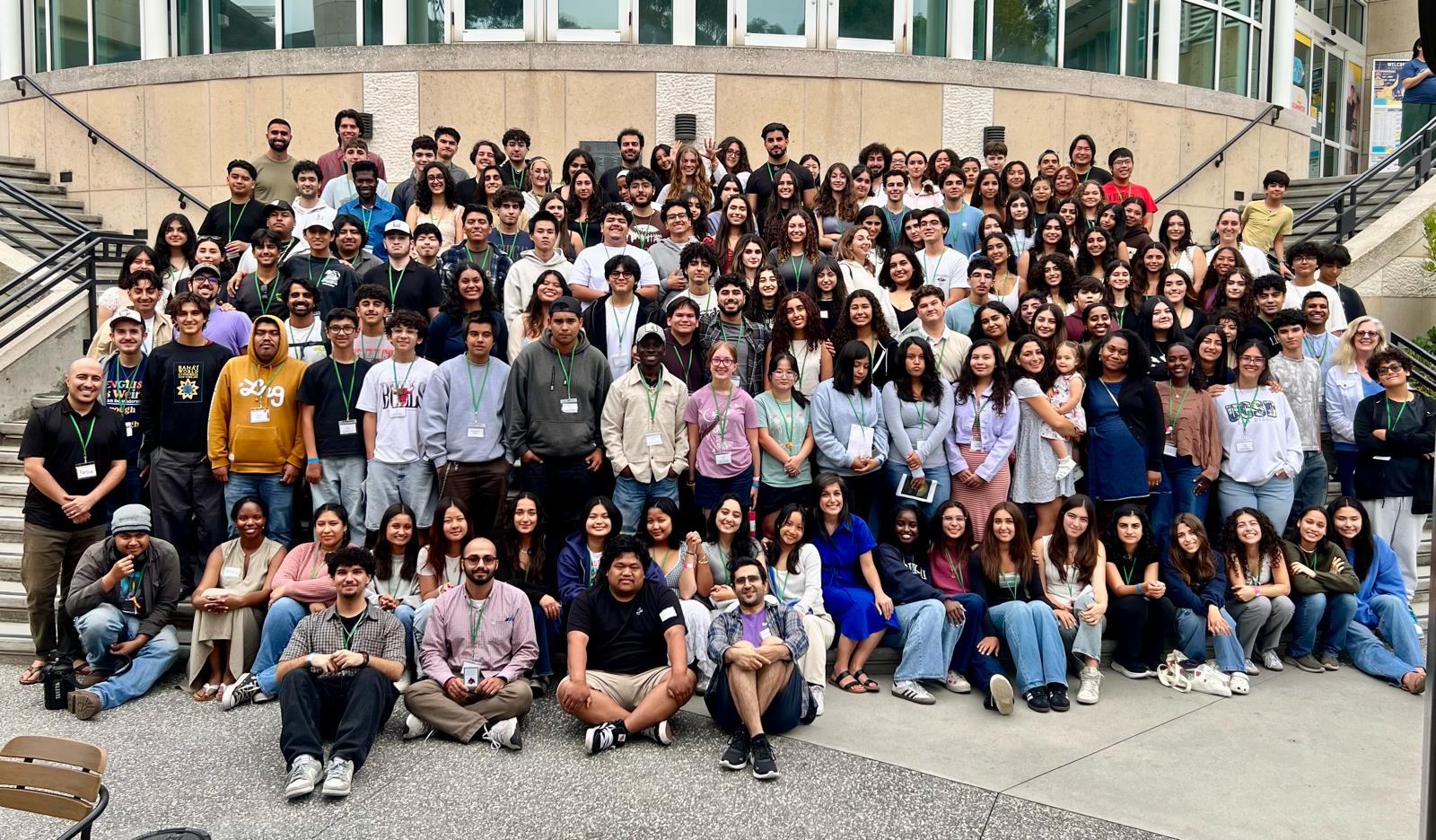
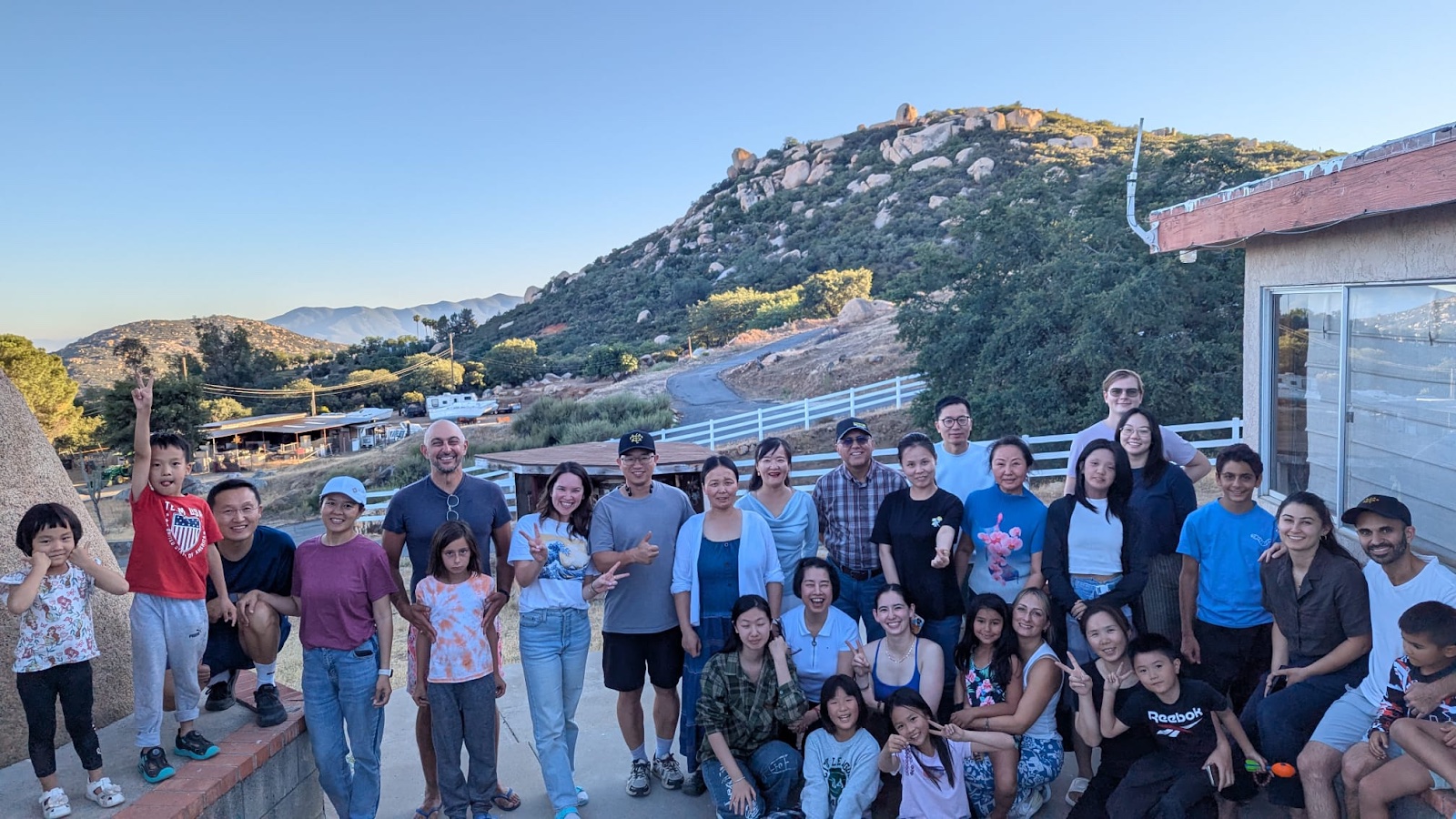
Thirty-two participants came together over a June weekend at a retreat center in Jamul, California, about 30 minutes west of San Diego. Children attended an English-language children’s class, preteens joined a junior youth group with readings in English, and adults participated in study circles tutored in Chinese.
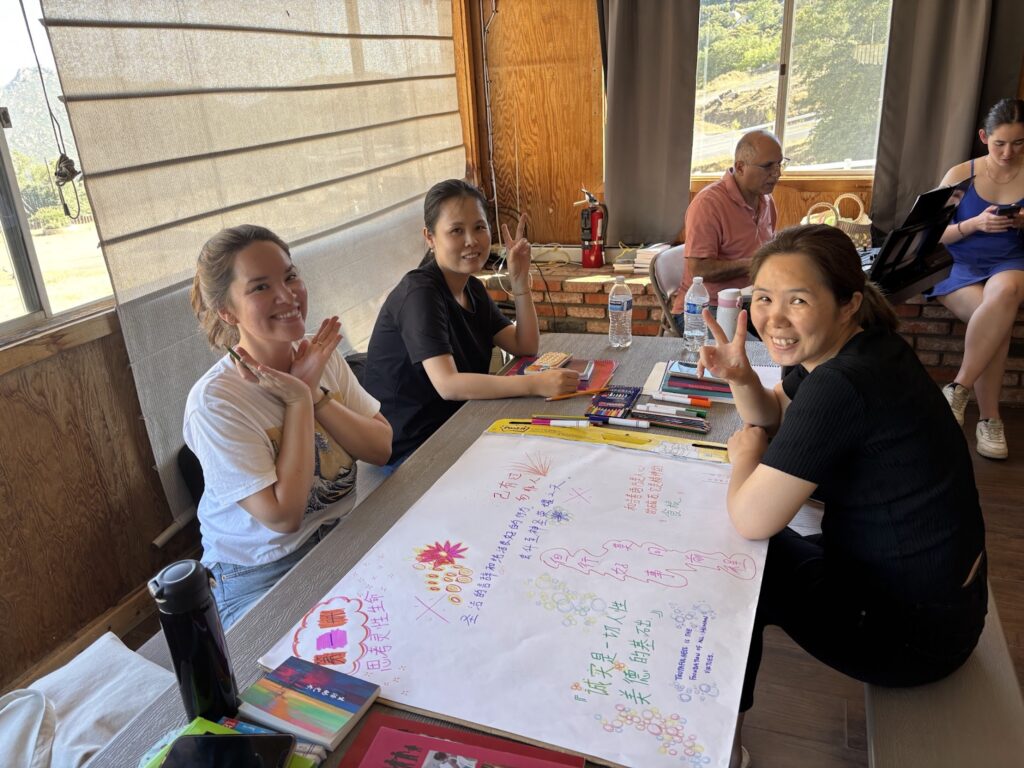
Haiyan and Qin Peng are Chinese Bahá’ís who recently settled near Los Angeles. In China, Qin found the Faith online and didn’t know any Bahá’ís. “It was so different to sit together with people – deepened Bahá’ís – at different points on the path of service,” Qin says about his experience at the camp.
During the camp, the Pengs were preparing for the birth of their baby. Their study circle included guidance on educating children. Haiyan says, “Most of the participants had kids and could speak from real experience. Before, we just learned from the book, but to hear from their real experience, from other parents, it was different.”
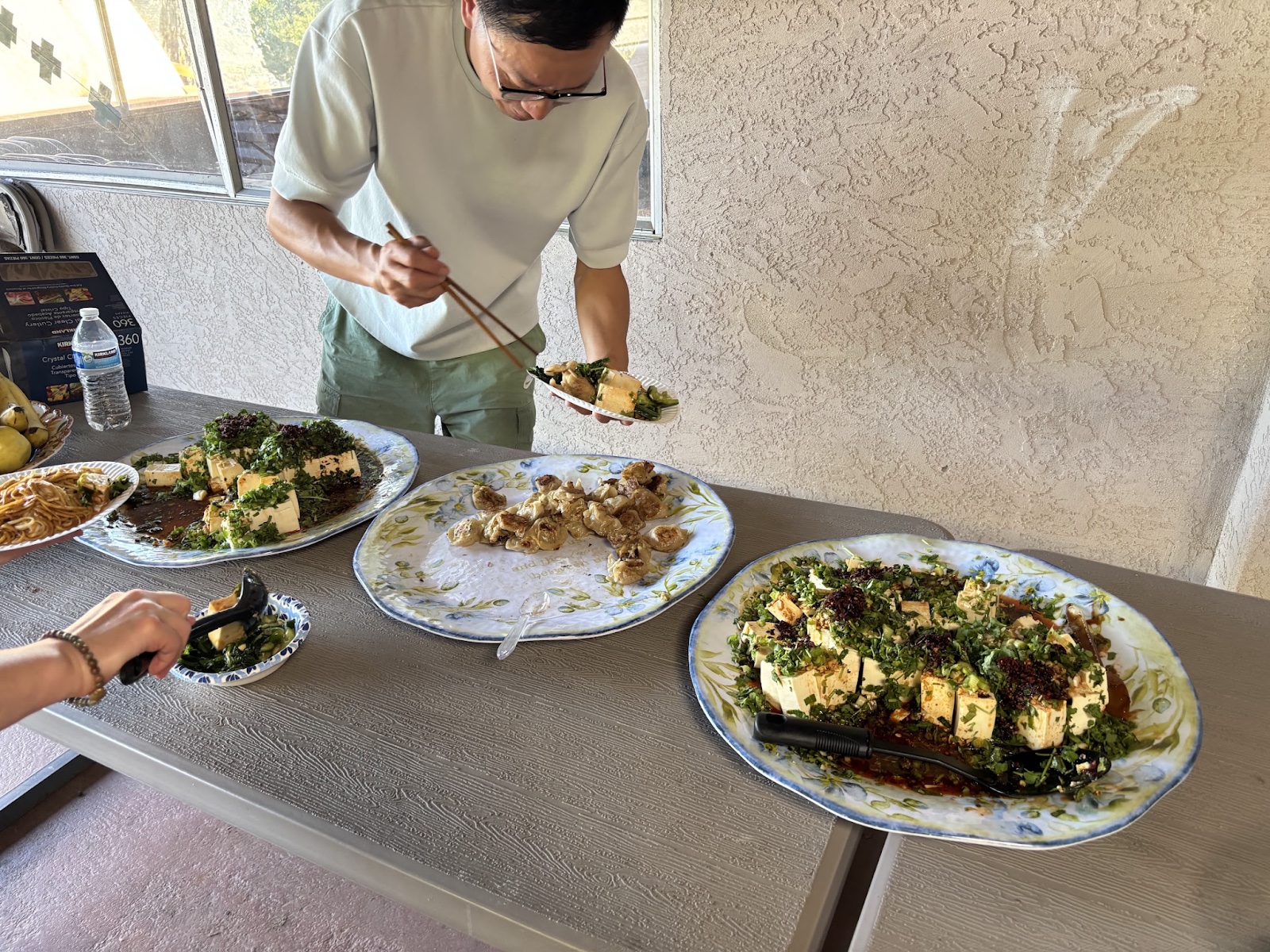
Beyond studying, informal bonding time over meals and through music was integral to the camp. The coordinators cooked three meals per day for the participants, including traditional Chinese foods. Pamela says, “We really felt so much love from the chefs’ service. In the morning and evening, we prayed and sang together, reflecting, doing artistic expression to express our learnings.” Her husband Shahram, one of the volunteer chefs, adds, “We cannot just teach and study; we need to use art as means to keep our interest and uplift our spirit, such as drawing, painting, and crafting.”
After the camp, coordinators and participants deepened their growing friendships, pursuing community-building activities. Several study circles continued after the camp. Qin and Haiyan have been supporting a children’s class hosted by friends in another city.
Abby He, an 18-year-old Chinese Bahá’í youth who moved to California two years ago, has deepened her engagement since the camp. “At the camp, I studied Ruhi Book 2 [Arising to Serve], the unit about understanding service and how young people can become positive influences in communities. One of the main ideas I learned is that service isn’t just about the task, it’s about learning how to encourage people to work together and grow,” she says. “Later, I used these learnings to help support a junior youth group.”
After the camp, He and the Shahriari family collaborated to start a junior youth group in Irvine for Chinese participants from ages 11 to 15. Pamela used her social media skills and Chinese fluency to connect with potential participants, posting videos about the benefits of the junior youth spiritual empowerment program on a popular Chinese app. These videos attracted attention and ultimately participants.
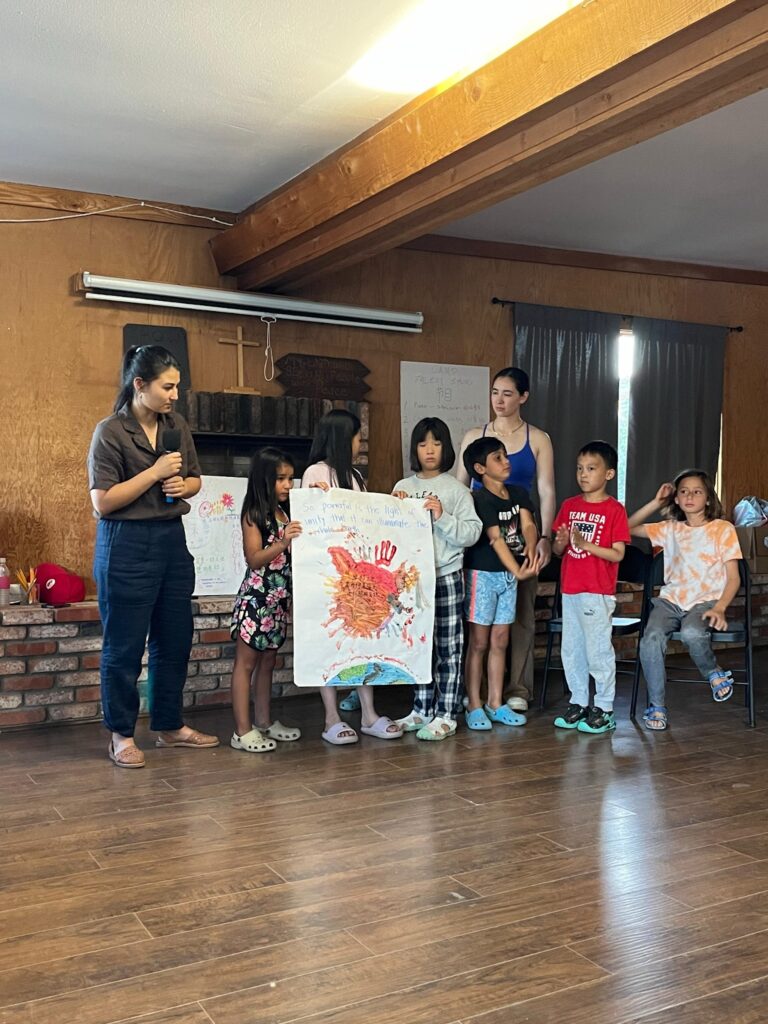
The Shahriari family hosts the group in their home, and Abby serves as an animator, mentoring and guiding the participants. In the beginning, some of the junior youth were reticent and wary. They were new to the United States; some had immigrated for school while their parents stayed in China. Soon, Pamela recounts, the group became a loving community. “They opened their hearts, developing the bonds of friendship with other fellows, and they are really excited to attend the weekly junior youth gathering. They even started to bring their own friends to the group.”
Abby adds, “This group is a place where each participant can grow together, showing love, to help those new to the United States.”
This Chinese junior youth group held their second five-day camp around Thanksgiving. They held a closing celebration with friends and family members, marking their completion of the book Breezes of Confirmation.
Collaborators from the three Southern California nuclei are already laying the groundwork for another retreat for Chinese families, building on the learnings from the inaugural camp.