
Home

National Spiritual Assembly

At the national level, Baha'i community life is governed by the National Spiritual Assembly. Like the Local Spiritual Assembly, this national-level governing council is elected annually, following the same basic electoral procedures: no nominations are permitted, campaigning is forbidden, secret ballots are used, moral character and practical ability are emphasized, and those men and women who receive the most votes are elected.

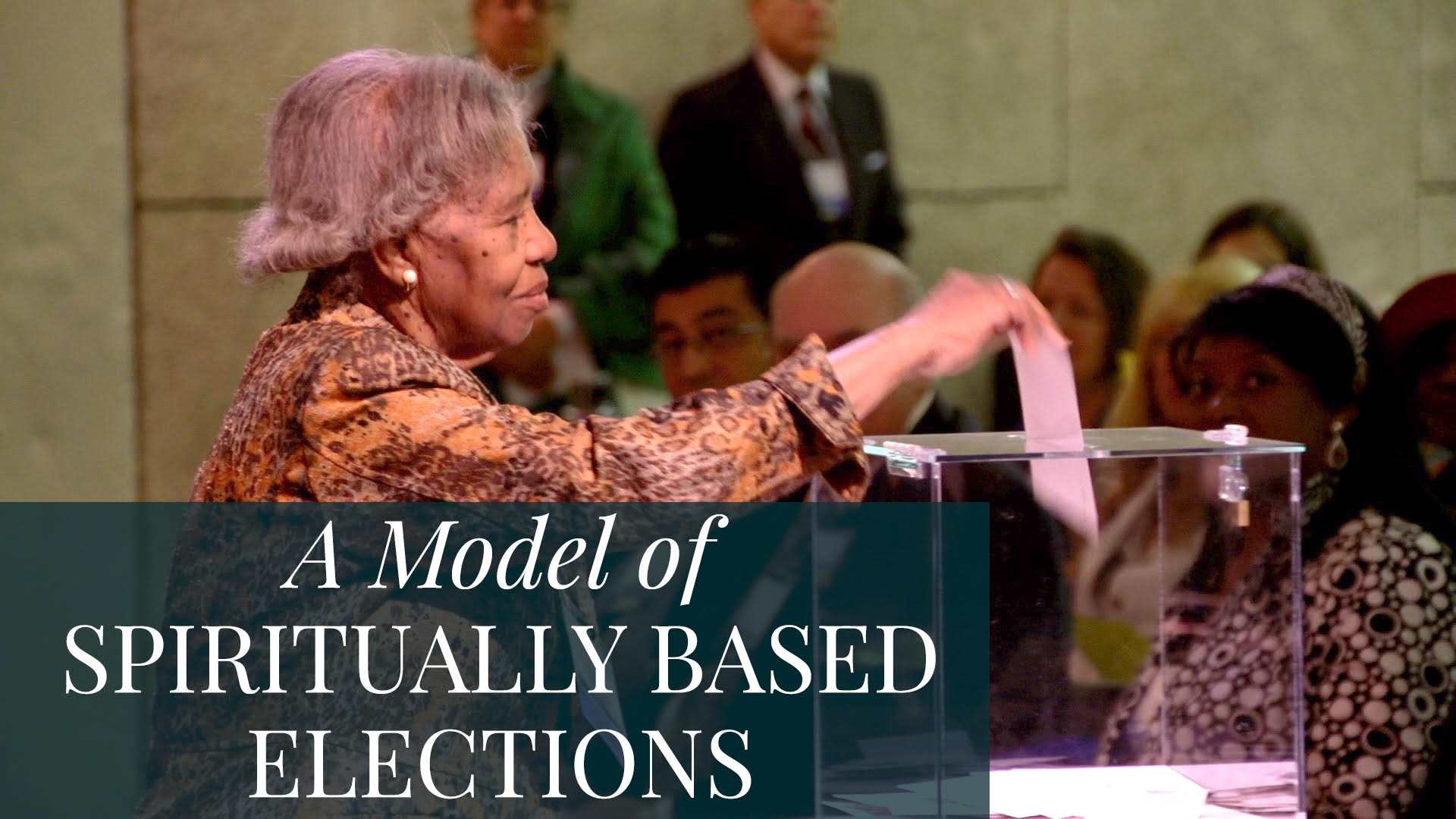
Whether at the local, regional, national, or international level, Baha'i elections follow a similar process that seeks to choose spiritually minded leaders from the entire body of believers in the area. Shown here is a Baha'i election in process in Panama. At the national level, Baha'i communities are guided by elected councils known as National Spiritual Assemblies.

National Spiritual Assembly
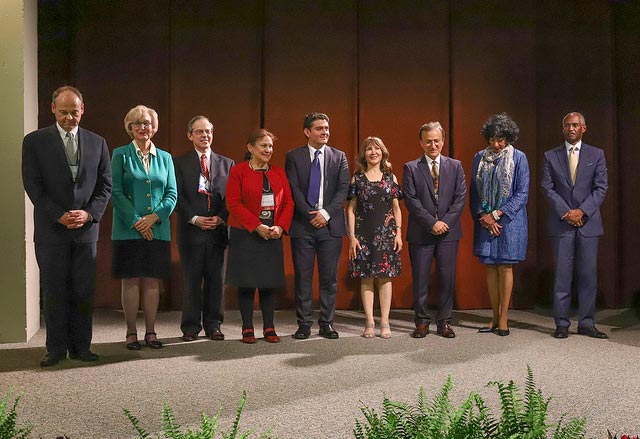
Members of the National Spiritual Assembly of the Baha'is of the United States
The electoral process at the national level is different in one respect. While the local Assembly is elected by all adult community members, the National Spiritual Assembly is elected by delegates, who, in turn, are chosen in "district" conventions. All adult Bah'is are eligible to vote in district conventions, and so the connection between the individual and his or her national-level governing body remains quite close.

In choosing members of the National Spiritual Assembly, delegates may vote for any adult Baha'i residing in the country - once again preserving the freedom of choice that is fundamental to the Baha'i electoral system.

As the Faith has grown, so have the number of National Spiritual Assemblies. In 1954, for example, there were just 12 National Spiritual Assemblies. By 2004, there were 183 National Spiritual Assem­blies around the world - in nearly every country.

Just as the men and women serving on Local Spiritual Assemblies oversee Baha'i community affairs within a municipal locality, National Spiritual Assemblies are charged with guiding and coordinating Baha'i activities within a given country. Their activities range from the adoption of nationwide teaching plans to the initiation of large-scale social and economic development projects; from overseeing relations with their respective national governments to coordinating with other religious groups and nongovernmental organizations.

And like Local Spiritual Assemblies, National Spiritual Assemblies benefit from the wisdom and experience of members of the counselling institutions. National Spiritual Assemblies work with members of the Continental Boards of Counsellors, individuals who function on all continents and larger regions of the globe. Just as Auxiliary Board members serve Local Spiritual Assemblies, Counsellors advise, assist, and encourage the work of National Assemblies in consultation and decision making. Collaborating in a spirit of ­harmony, the two branches elevate public discourse to principled ­consultation, concerning themselves not only with the laws and regulations of the Faith, but also with the encouragement and embrace of measures that foster individual initiative and a whole-hearted response to the spiritual truths of the Faith.

Related Items: