

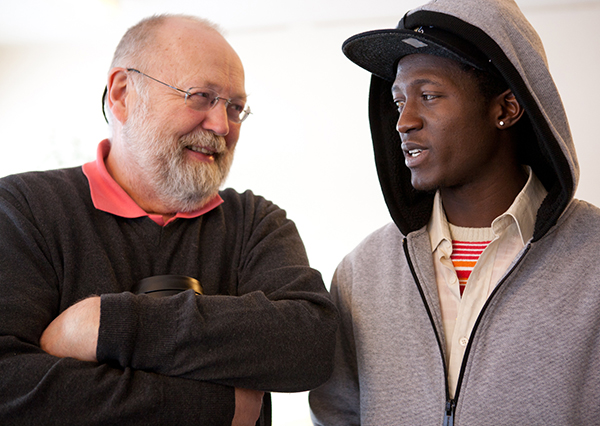
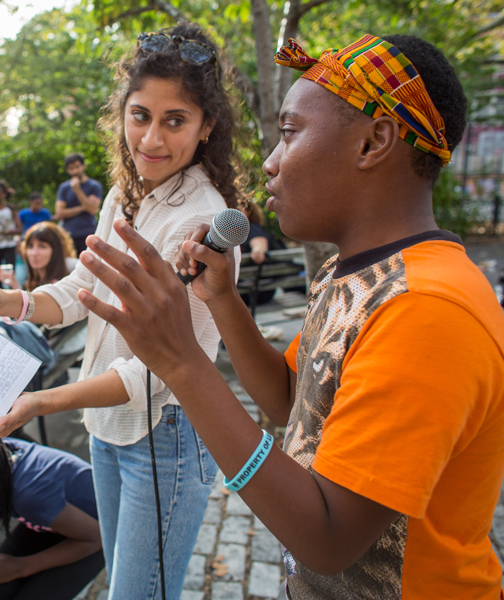
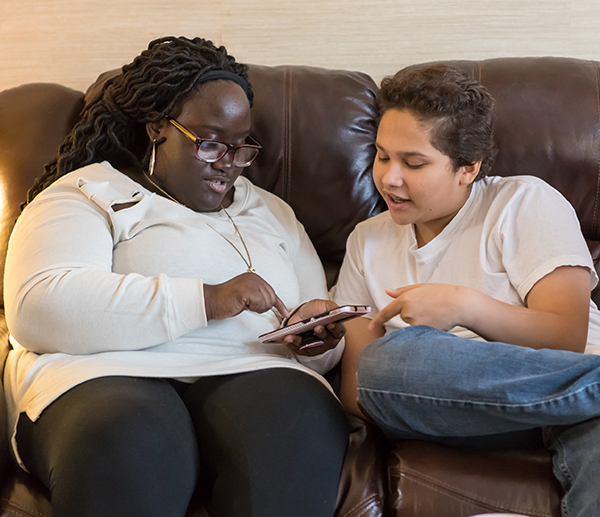
In neighborhoods across the country, Baha’is and their friends are engaged in a community building process that cultivates love and translates it into action.
It’s no secret that America is going through a tumultuous time. Tensions and divisions surface every day, reminding us that the stains of injustice and racial prejudice are set deeply in the fabric of our society. Baha’is are committed to reshaping society around principles of oneness – such as love, inclusivity and reciprocity. We hope to join hands with the countless like-minded Americans working for these same goals, and invite everyone to take a look at our approach.
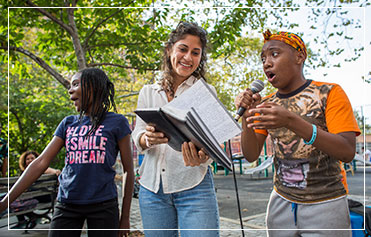
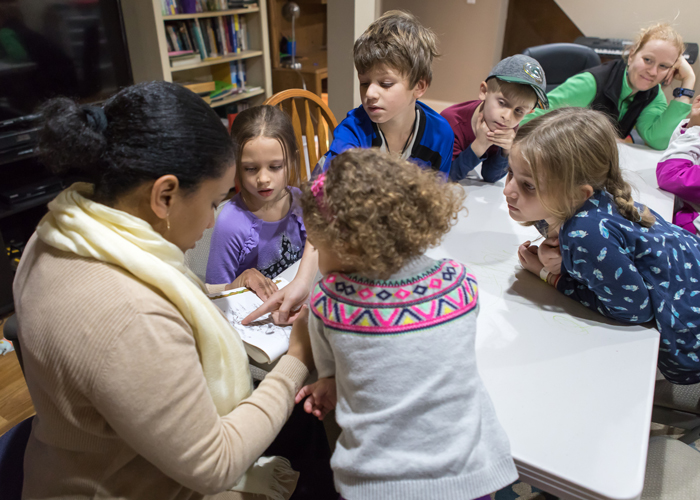
Classes for children allow a community’s youngest members to practice their God-given qualities, such as kindness, generosity, patience and compassion. Parents, teens and young adults teach these classes and create an environment where children feel they belong to the community and share in its purpose.
Groups for teens and pre-teens tap into young people’s acute sense of justice, growing awareness and increased interest in profound questions. Through storytelling, discussion, recreation, arts and service projects, participants form healthy and productive patterns of behavior. They build discernment and decision-making skills, and learn to address the needs of their communities.

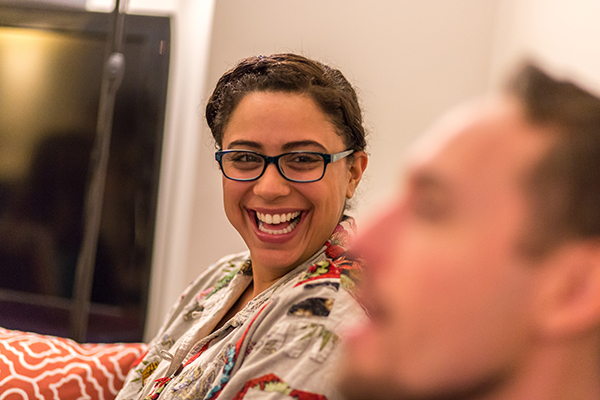
Study circles are for adults and older teens. They connect study of Baha’i Sacred Texts to acts of service. Topics include: the spiritual nature of life, the basic features and history of the Baha’i Faith, how to build unified communities, and how to teach children and mentor youth. In their study circles, neighbors share insights with one another and design service projects relevant to their communities.
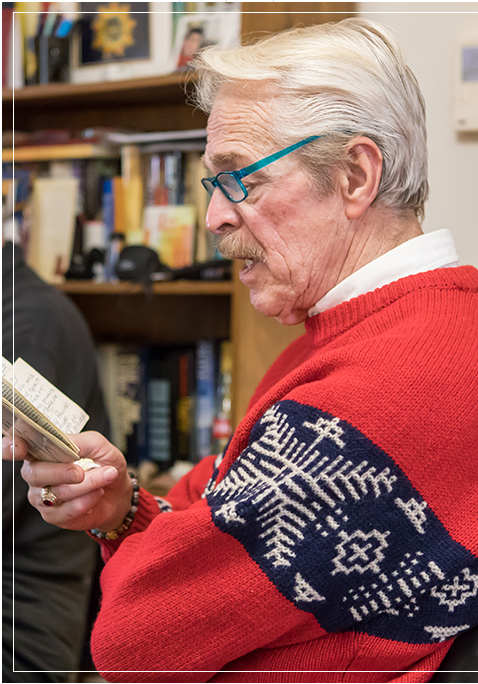
Prayer gatherings bring friends, families and neighbors together in a spirit of worship — feeding the soul through prayer, song and contemplation. Drawing strength from the cultural character of each community, they inspire meaningful connections in an informal setting.
Take a Peek
Community builders, from a variety of backgrounds, share their experiences of study circles, children’s classes and youth groups.